Multigenerational Itineraries: Shorter Island-Hops That Suit All Ages and Energy Levels
Last updated: March 11, 2026
Quick Answer
Multigenerational itineraries with shorter island-hops work best when you limit travel to 5-7 days, choose destinations within 2-3 hours of each other, and build in flexibility for varying energy levels. In the Galapagos, this means focusing on central islands like San Cristobal, Santa Cruz, Isabela, and Floreana rather than attempting the entire archipelago. The key is balancing active excursions with rest time and selecting accommodations that let grandparents relax while teenagers explore.
Key Takeaways
- Shorter is smarter: 5-7 day itineraries prevent exhaustion and keep everyone engaged, especially young children and older adults
- Central island clusters: Stick to 2-3 nearby islands with travel times under 2 hours to minimize transit fatigue
- Flexible daily pacing: Plan one major activity per day with optional add-ons for high-energy family members
- Age-appropriate options: Choose destinations offering parallel activities (snorkeling for teens, beach walks for grandparents)
- Small group advantages: Boats under 16 passengers allow personalized pacing and easier family coordination
- Morning departures work best: Early island transfers let you arrive with energy for afternoon activities
- Built-in downtime: Schedule at least one "slow day" every 2-3 days for rest and independent exploration
- Land-based flexibility: Island-hopping from a fixed hotel base offers more control than cruise schedules
Why Do Shorter Island-Hops Work Better for Multigenerational Groups?
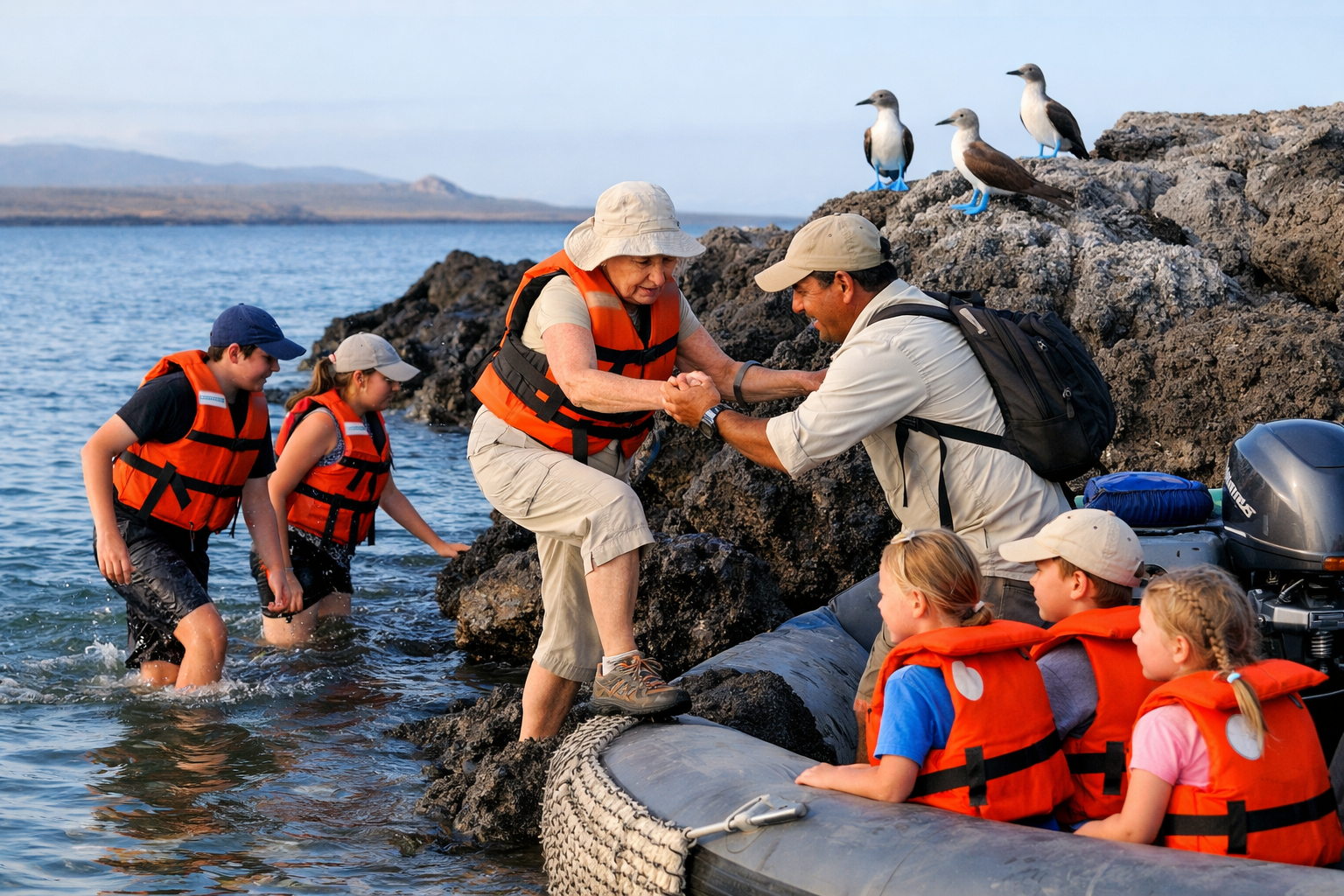
Shorter island-hopping itineraries reduce the physical demands that cause multigenerational trips to fail. When you're traveling with ages 5 to 75, the limiting factor isn't the destination—it's how much movement everyone can handle in a day.
I've guided families who tried to pack seven islands into eight days. By day four, the grandparents were exhausted, the kids were cranky, and parents were mediating instead of enjoying. The families who had the best experiences? They visited three islands in five days and actually remembered what they saw.
Specific advantages of shorter hops:
- Reduced seasickness exposure: Transfers under 2 hours minimize rough water time for sensitive stomachs
- More quality time: Less packing and unpacking means more beach time and wildlife watching
- Energy for activities: Arriving at 10 AM instead of 12 PM gives you a full afternoon for exploration
- Flexibility to skip: Shorter itineraries let you drop an activity if someone's tired without ruining the trip
- Lower stress: Fewer logistics mean parents can relax instead of constantly coordinating
Choose shorter hops if your group includes children under 8, adults over 65, or anyone with mobility considerations. Choose longer itineraries only if everyone in your group regularly hikes and travels actively.
What Makes an Island-Hop "Short" Enough for All Ages?
A truly multigenerational island-hop keeps individual transfers under 2 hours and limits total travel days to 30-40% of your trip.
For Galapagos specifically, this means:
- Santa Cruz to Isabela: 2-2.5 hours by speedboat (acceptable if only one way and not returning same day, flight can be an option)
- Santa Cruz to North Seymour/South Plazas/Santa Fe: 1-1.5 hours each way (ideal)
- Santa Cruz to Bartolome: 2-3 hours each way (a bit long for most families)
The 2-hour rule exists for good reason. I've watched toddlers handle a 90-minute boat ride beautifully, then fall apart on hour three of a longer crossing. Older adults with joint issues can sit comfortably for two hours but struggle with extended periods in boat seats.
Red flags that an itinerary is too ambitious:
- More than one transfer per day
- Back-to-back long travel days (3+ hours)
- No buffer days between active excursions
- Activities scheduled immediately after arrival
- More than 4 islands in a week
The sweet spot: 2-3 islands over 7 days (including base island), with transfers on days 3, and 5, leaving full days 2 and 6 for exploration without packing, and day 6 as buffer or rest day, remember day 1 is an arrival day and day 7 is a departure day.
How Do You Build Flexibility Into Multigenerational Itineraries?
Build flexibility by planning core activities everyone does together, then offering optional add-ons for different energy levels.
The two-tier activity model:
Tier 1 (Everyone):
- Morning panga ride to see wildlife (1 hour, seated)
- Beach time with shallow-water exploration
- Guided walks at a slow pace
- Sunset viewpoints
Tier 2 (Optional for energetic members):
- Snorkeling extensions beyond basic beach entry
- Volcano hikes with elevation gain
- Kayaking excursions
- Longer trail options
I always tell families: the grandparents and young kids set the baseline pace. If the teenagers want more, they can join the optional afternoon snorkel while others rest at the hotel.
Practical flexibility tactics:
- Book accommodations with common areas where some can rest while others explore
- Choose small group tours (under 12 people) where guides can split activities
- Schedule major activities in mornings when everyone has energy
- Plan "home base" days where the hotel becomes the hub
- Always have a backup indoor option for weather or fatigue
Common mistake: Assuming everyone needs to do everything together. The best family trips I've guided had moments of separation. Grandpa sketched birds at the hotel while the kids snorkeled. Everyone was happy.
Which Galapagos Islands Work Best for Shorter Multigenerational Island-Hops?
Santa Cruz, Isabela, and Floreana form the ideal triangle for multigenerational island-hopping in the Galapagos.
Santa Cruz (Your hub):
- Charles Darwin Research Station (easy walking, stroller-friendly)
- Tortuga Bay beach (1-hour flat trail or water taxi option)
- Las Grietas swimming (stairs manageable for most ages)
- Puerto Ayora town (restaurants, shops, accessible)
Isabela (Active exploration):
- Tintoreras islet (short panga ride, minimal walking)
- Concha de Perla snorkeling (calm bay, easy entry)
- Sierra Negra volcano (choose short or long hike options)
- Flamingo lagoons (flat, wheelchair-accessible viewing)
Floreana (Quiet escape):
- Post Office Bay (beach landing, gentle activity)
- Devil's Crown snorkeling (for strong swimmers only—others stay on boat)
- Loberia beach (sea lion watching, minimal exertion)
- Asilo de la Paz (moderate hike—optional for fit members)
Why this combination works: Total travel time between any two islands stays under 2.5 hours. Each island offers low-energy and high-energy options. You can base in Santa Cruz and do Isabela and Floreana as day trips, or spend 2 nights on each.
Skip these for multigenerational groups: Bartolome (5+ hour round trip crossing), Española (5+ hour round trip crossing from San Cristobal), Fernandina/Genovesa (remote, cruise only, long overnight navigations).
What Does a Sample 5-Day Multigenerational Island-Hop Look Like?
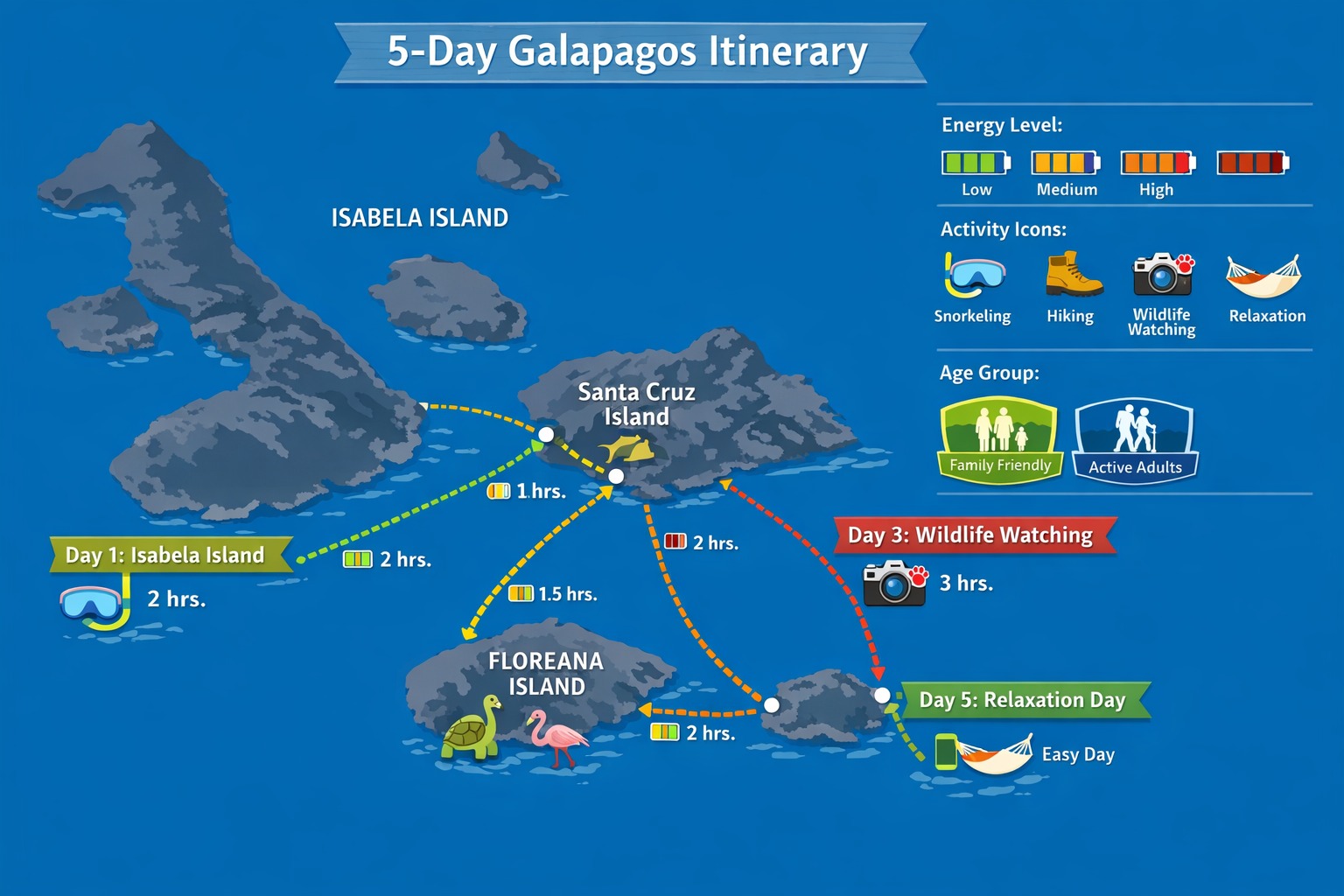
Here's an itinerary I've refined over dozens of family groups. It balances movement with rest and offers daily flexibility.
Day 1: Arrival & Santa Cruz
- Morning: Fly to Baltra, transfer to Puerto Ayora (1 hour)
- Afternoon: Charles Darwin Research Station or Tortoises in Santa Cruz highlands (easy walking, 2 hours)
- Evening: Free time in town, early dinner
- Energy level: Low
Day 2: Santa Cruz Exploration
- Morning: Tortuga Bay (water taxi for grandparents, trail for energetic members)
- Afternoon: Beach time and swimming
- Optional: Snorkeling at Playa Mansa for strong swimmers
- Energy level: Medium, with low-energy options
Day 3: Uninhabited Island Exploration
- Early Morning: Navigation to North Seymour/Plazas of Santa Fe
- Mid morning: Island walk, Beach time or snorkeling
- Afternoon: Return navigation and free time
- Energy level: Medium, with low-energy options
Day 4: Transfer to Isabela
- Morning: 2-hour speedboat to Isabela
- Afternoon: Settle in, Concha de Perla snorkeling or beach walk
- Evening: Town exploration
- Energy level: Medium (travel day)
Day 5: Isabela Activities
- Morning: Tintoreras tour (everyone) or Sierra Negra hike (fit members only)
- Afternoon: Beach rest or flamingo lagoon walk
- Evening: Free time
- Energy level: Split options
Day 6: Return to Santa Cruz
- Morning: Speedboat back to Santa Cruz (2 hours)
- Afternoon: Las Grietas or shopping in Puerto Ayora
- Energy level: Low to medium
Day 7: Return to Mainland Ecuador
- Early Morning: Visit to the Giant tortoises in the highlands (2 hours)
- Morning: Transfer to airport for flight back to mainland
- Energy level: Low to medium
Why this works: Only two transfers and one navigatable day tour. Three full days of activities. Built-in rest periods. Options to split up based on energy. No back-to-back exhausting days.
How Do Small Ships Compare to Land-Based Island-Hopping for Families?
Small ships (under 16 passengers) and land-based island-hopping each have distinct advantages for multigenerational groups. I recommend land-based for most families.
Land-based advantages:
- Flexibility: Skip an activity if someone's tired without affecting others
- Space: Separate rooms mean better sleep for everyone
- Routine: Unpack once per island, stable base for young kids
- Cost control: Choose your meal times and restaurant budgets
- Accessibility: Easier for mobility-limited grandparents
Small ship advantages:
- Remote islands: Access to Española, Genovesa, Fernandina without long day trips
- All-inclusive: No daily planning or restaurant decisions
- Naturalist guides: Expert interpretation throughout
- Efficiency: Wake up at new islands without conscious travel effort
My recommendation: If your group includes anyone over 70 or under 6, choose land-based. The ability to rest in a stable hotel room, take a break from group activities, and control your daily pace outweighs the convenience of a ship.
I've seen too many families book cruises because they seemed easier, then struggle with seasickness, shared cabins, and inflexible schedules. The families who stayed land-based had more control and better experiences.
Choose small ships only if: Everyone in your group is comfortable on boats, ages range from 8-65, and you want to see remote islands that require overnight sailing.
What Are the Most Common Mistakes in Planning Multigenerational Island-Hops?
After guiding hundreds of family groups, I see the same planning mistakes repeatedly. Here's what to avoid.
Mistake 1: Overestimating everyone's energy
Families assume grandparents can keep up with teenagers. They can't. Plan for the slowest member, not the fastest.
Mistake 2: Booking back-to-back travel days
Moving islands two days in a row exhausts everyone. Always put a full activity day between transfers.
Mistake 3: Ignoring meal logistics
Young kids need to eat on schedule. Elderly travelers need familiar food options. Research restaurants before you arrive.
Mistake 4: Skipping travel insurance
When you're coordinating 8+ people across three generations, someone will get sick or injured. Insurance isn't optional.
Mistake 5: Rigid group activities
Forcing everyone to do everything together creates resentment. Build in split options.
Mistake 6: Underestimating sun exposure
Galapagos sun is intense. Families forget that grandparents and toddlers need more shade breaks than adults.
Mistake 7: Booking the cheapest speedboat
Rough crossings in budget boats cause seasickness. Pay extra for inter-isand Cesna flights.
Mistake 8: No backup plans
Weather changes. Boats get delayed. Always have a Plan B for each day.
The fix: Build extra time, plan for the least mobile member, and accept that flexibility matters more than seeing everything.
How Do You Handle Different Activity Levels Within the Same Family?
Split activities strategically while maintaining shared experiences that bond the group.
The 70/30 rule: Plan for 70% of activities to be together, 30% split by ability level.
Shared experiences (everyone together):
- Boat rides to viewing points
- Wildlife watching from beaches
- Meals and evening time
- Easy walking tours in towns
- Sunset viewpoints
Split experiences (by energy level):
- Snorkeling (strong swimmers go further, others stay shallow)
- Hiking (fit members take long routes, others take short versions)
- Afternoon activities (active members kayak, others rest)
- Early morning excursions (optional for energetic members)
Practical implementation:
Hire guides who can split groups. In Galapagos, many naturalist guides work in pairs for larger families. One takes the hikers up Sierra Negra, the other does a beach walk with the rest.
Communication is critical. Before the trip, discuss expectations. Some grandparents want to do everything and will push through discomfort. Others are happy reading at the hotel. Know which you have.
I've guided families where the 68-year-old grandmother out-hiked her son. I've also guided families where the "young" 55-year-old needed the most rest. Don't assume based on age—assess actual fitness levels honestly.
The conversation to have before booking: "What's everyone's realistic activity level? Who wants to push themselves, and who wants to relax?"
What Should You Look for in Accommodations for Multigenerational Island-Hopping?
Choose accommodations with communal spaces, varied room configurations, and locations that minimize additional travel.
Essential features:
- Connecting rooms or suites: Keep young kids near parents, grandparents nearby but separate
- Common areas: Lobbies, patios, or pools where some can rest while others explore
- Central location: Walking distance to town, restaurants, and tour departure points
- Accessibility: Ground-floor options, elevators (only at luxury hotels, there are many 2 story lodges to avoid the staircase issue, ramps for mobility-limited members
- Flexible dining: Breakfast times that accommodate early risers and late sleepers
In Puerto Ayora (Santa Cruz):
Look for hotels on Avenida Charles Darwin within walking distance of the pier. This eliminates taxi coordination for boat departures.
In Puerto Villamil (Isabela):
Stay near the beach. The town is small and walkable, but beachfront locations let grandparents rest while kids play.
Red flags:
- Hotels requiring boat or vehicle access only
- No common spaces (everyone stuck in rooms)
- Rigid meal times (problematic with young kids)
- Steep stairs without elevator alternatives
- Remote locations requiring taxis for everything
Budget consideration: Spending 20% more on accommodations with better locations and amenities saves money on taxis and reduces daily stress tremendously.
I always tell families: your hotel is your base camp. Choose one that lets different generations operate on different schedules without conflict.
When Is the Best Time to Plan Multigenerational Island-Hops in Galapagos?
Book 6-9 months in advance for travel during June-August or December-January. These periods offer the best balance of weather, wildlife, and family schedule alignment.
Timing considerations by season:
June-August (Galapagos winter):
- Pros: Kids are available to travel, will be able to spend time with other kids of same age - school summer vacation, albatross breeding
- Cons: Less calm seas, Cooler water (wetsuits needed), occasional drizzle
- Best for: Families with school-age children, those pwho need to keep to education schedules
December-January (Galapagos summer):
- Pros: Warmest water, mild seas, baby sea lions, green landscapes, holiday family gatherings
- Cons: Higher prices, occasional afternoon rain
- Best for: Holiday reunions, families with flexible schedules
March-May (shoulder season):
- Pros: Fewer tourists, calmest seas, lower prices, good weather, marine iguana nesting
- Cons: Doesn't align with most school breaks
- Best for: Retired grandparents traveling with homeschooled grandchildren
September-November (transition season):
- Pros: Moderate prices, penguin activity, sea lion pupping
- Cons: Variable weather, rougher seas some days
- Best for: Flexible families who can adjust plans based on daily conditions
Booking timeline:
- 9 months out: Reserve accommodations in Puerto Ayora and Puerto Villamil
- 6 months out: Book inter-island speedboats and tours. Arrange flights to Galapagos
- 1 month out: Confirm all reservations and create detailed daily schedules
Why advance booking matters for families: The best family-friendly hotels (with connecting rooms and central locations) sell out early. Speedboat seats fill up during peak seasons. Last-minute planning forces you into less suitable options.
FAQ
How long should a multigenerational island-hop in Galapagos be?
5-7 days is ideal. This allows 3-4 full activity days plus travel days without exhausting older or younger family members. Shorter trips feel rushed; longer trips lead to fatigue.
What's the minimum age for Galapagos island-hopping?
There's no official minimum, but children under 6 struggle with boat rides and sun exposure. Ages 7 and up handle the travel well if you pace activities appropriately and plan rest time.
Can elderly grandparents with limited mobility do island-hopping?
Yes, if you choose accessible islands and activities. Santa Cruz and Isabela offer beach-level wildlife viewing, vehicle-accessible sites, and flat walking paths. Avoid islands requiring wet landings or steep trails.
How much does a 5-day multigenerational island-hop cost per person?
Budget $1,800-$3,500 per person including flights from mainland Ecuador, accommodations, tours, and meals. Costs vary based on hotel quality and tour choices. Children often receive discounts.
Should we book tours in advance or when we arrive?
Book major tours and speedboat transfers in advance, especially during June-August and December-January. You can arrange some activities locally, but popular tours sell out during peak seasons.
What happens if someone gets seasick on the speedboat?
Sit in the middle of the boat where motion is minimal, take seasickness medication 30 minutes before departure, and focus on the horizon. Most crossings between central islands are under 2 hours, making seasickness manageable.
Can we split up during activities, or must families stay together?
You can absolutely split up. Many families have energetic members do snorkeling or hiking while others rest. Hire guides who can accommodate split groups, or plan independent activities.
What's better for families: cruise or land-based island-hopping?
Land-based offers more flexibility, better sleep, and easier pacing for mixed ages and abilities. Cruises work for families where everyone is comfortable on boats and wants to see remote islands.
How do we handle dietary restrictions for different family members?
Puerto Ayora, Puerto Baquerizo and Puerto Villamil have restaurants accommodating vegetarian, gluten-free, and other dietary needs. Communicate restrictions when booking tours that include meals.
What should we pack differently for a multigenerational trip?
Bring extra seasickness medication, sun protection for sensitive skin, comfortable walking shoes in multiple widths, portable snacks for young kids and diabetic grandparents, and a basic first aid kit.
Are there age limits for specific Galapagos activities?
Snorkeling typically requires ages 6+, kayaking 8+, and challenging hikes 10+. However, these are guidelines—assess your family members' actual abilities rather than relying solely on age.
How do we keep everyone happy when energy levels differ so much?
Set expectations before the trip, plan split activities daily, choose accommodations where some can rest while others explore, and accept that not everyone needs to do everything together.
Conclusion
Multigenerational itineraries with shorter island-hops succeed when you prioritize flexibility over seeing everything. The families I've guided who had the best experiences chose 1-2 base islands over 5 days, 1-2 navigation tours (visiting uninhabited islands), built in rest time, and accepted that different ages need different pacing.
Start with Santa Cruz or San Cristobal as your hub. If staying for more thant 5 days Add Isabela for active exploration and Floreana for quiet wildlife watching. Keep transfers under 2 hours. Plan one major activity per day with optional add-ons for energetic members. Choose land-based accommodations that let different generations operate on different schedules.
Your next steps:
- Assess your group honestly: List each person's actual fitness level and travel preferences
- Choose your islands: Stick to 2-3 central islands rather than attempting the entire archipelago
- Book accommodations first: Secure hotels with connecting rooms and central locations 6-9 months ahead
- Plan split activities: Identify which experiences everyone does together and which split by ability
- Build in buffer time: Add rest days and backup plans for weather or fatigue
The goal isn't to see every island or do every activity. The goal is creating memories where the 8-year-old, the 45-year-old, and the 72-year-old all come home happy. Shorter island-hops make that possible.
I've spent over three decades guiding families through Galapagos. The trips that fail try to do too much. The trips that succeed embrace a slower pace and celebrate what makes multigenerational travel special—time together at a rhythm everyone can enjoy.